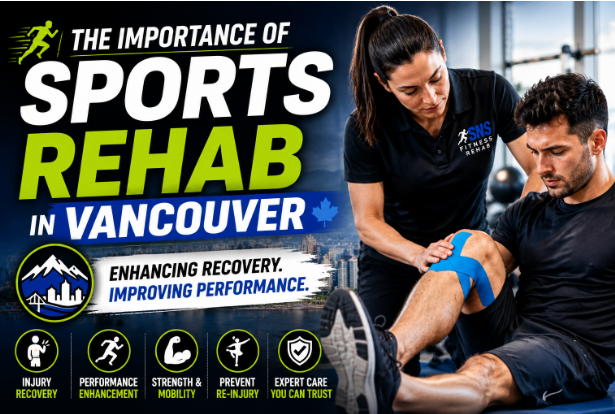
The Importance of Sports Rehab in Vancouver: Enhancing Recovery and Performance
Whether you’re a professional athlete, a weekend runner, or someone returning to exercise after injury, sports rehabilitation (sports rehab) has become a critical part of maintaining long-term health and athletic performance. In a city like Vancouver—where outdoor activity, fitness culture, and competitive sports thrive—effective rehabilitation is increasingly recognized as more than injury treatment; it is a strategic tool for performance enhancement.
What Is Sports Rehabilitation?
Sports rehabilitation is a specialized branch of physical recovery focused on:
- Recovering from sports-related injuries
- Restoring mobility and function
- Reducing pain and inflammation
- Preventing future injuries
- Improving athletic performance
Unlike general rehabilitation, sports rehab integrates exercise science, biomechanics, mobility training, strength conditioning, and performance optimization.
Common conditions treated include:
- Sprains and strains
- Tendon injuries
- Knee instability
- Shoulder dysfunction
- Back pain
- Post-surgical recovery
- Overuse injuries
Why Sports Rehab Matters in Vancouver
Vancouver’s active lifestyle contributes to high participation across:
- Running and endurance sports
- Cycling
- Hiking and trail activities
- Skiing and snowboarding
- Soccer and recreational leagues
- Strength and conditioning programs
With greater activity comes greater exposure to injury risk.
Sports rehab provides structured recovery pathways that help individuals return safely while maintaining conditioning levels.
Key Benefits Include:
1. Accelerated Recovery
Targeted rehabilitation programs help restore:
- Joint stability
- Muscle strength
- Neuromuscular control
- Movement efficiency
Early intervention often shortens downtime and reduces secondary complications.
2. Injury Prevention
Modern sports rehabilitation emphasizes identifying:
- Movement compensations
- Muscle imbalances
- Mobility limitations
- Poor training mechanics
Preventive rehabilitation can lower recurrence rates and support sustainable training.
3. Performance Enhancement
Sports rehab is no longer only reactive.
Athletes increasingly use rehabilitation frameworks to:
- Improve movement patterns
- Increase force production
- Enhance agility and coordination
- Optimize recovery between training sessions
Performance and rehabilitation are now closely connected.
Core Components of an Effective Sports Rehab Program
A comprehensive sports rehabilitation process often includes:
Assessment
Detailed evaluation of:
- Strength
- Range of motion
- Functional movement
- Sport-specific demands
Manual Therapy
Hands-on approaches may assist with:
- Tissue mobility
- Pain management
- Joint function
Corrective Exercise
Exercises designed to restore efficient movement patterns.
Progressive Strength Training
Structured loading helps rebuild resilience.
Return-to-Sport Testing
Objective measurements ensure readiness before full participation.
Technology Transforming Sports Rehabilitation
Many rehabilitation practices now incorporate:
- Motion capture analysis
- Force measurement systems
- Wearable recovery tracking
- Video movement assessment
- Data-driven training adjustments
These technologies support more individualized treatment and measurable outcomes.
Who Benefits from Sports Rehab?
Sports rehabilitation isn’t limited to elite competitors.
It supports:
- Professional athletes
- Recreational exercisers
- Youth athletes
- Active adults
- Individuals recovering from surgery
- People returning to activity after prolonged inactivity
Choosing the Right Sports Rehab Approach in Vancouver
When selecting a rehabilitation provider, consider:
✔ Experience with sport-specific recovery
✔ Individualized treatment planning
✔ Strength and conditioning integration
✔ Evidence-informed methodologies
✔ Return-to-performance strategies
The most effective rehab programs focus not only on healing but also on helping individuals move and perform better than before.
Future of Sports Rehabilitation
Sports rehab continues evolving toward:
- Personalized recovery protocols
- Preventive performance care
- Integrated strength and therapy models
- Data-supported decision making
For active communities like Vancouver, rehabilitation is increasingly becoming a cornerstone of long-term physical performance.
FAQ: Sports Rehabilitation in Vancouver
How long does sports rehabilitation usually take?
Recovery timelines vary depending on injury severity, sport demands, and consistency with treatment.
Can sports rehab improve performance even without injury?
Yes. Many athletes use rehabilitation principles proactively to improve mobility, efficiency, and resilience.
Do recreational athletes benefit from sports rehab?
Absolutely. Structured rehab supports safe movement and sustainable activity levels for all fitness backgrounds.
Is sports rehab different from general physiotherapy?
Sports rehab tends to include more sport-specific assessment, conditioning, and return-to-performance planning.